Welcome to our Forest School blog.
We are excited to be a Forest School – you can read more about what it means to be a Forest School on our “About Forest Schools” page
If you would like to see posts from previous years then go to Home on the menu.
Welcome to our Forest School blog.
We are excited to be a Forest School – you can read more about what it means to be a Forest School on our “About Forest Schools” page
If you would like to see posts from previous years then go to Home on the menu.
This week I joined Year 1D in the art studio and we made Tudor houses using cardboard. The children collaborated in pairs and followed instructions to stick 3 pieces of various sizes to gather to make a tall house.
We used masking tape to fasten the houses together, and we made our houses lean forward, just like real Tudor houses!
We then cut out a stand from cardboard using a template and this will be used to stand the houses up.
1D enjoyed an exciting outdoor learning session centred around the fire pit. Before lighting the fire, we talked together about fire safety and the importance of sitting on the benches at all times.
Once the fire was lit, the pupils spent time quietly observing the flames. They noticed how the fire changed shape and colour as the wood burned. We discussed what we could see, hear and smell. The children described the crackling sounds, the warmth of the fire, and the different shades of orange, yellow and red in the flames. This was a great opportunity to build vocabulary and practise careful observation.
After watching the fire, the children used charcoal to create their own drawings inspired by what they had seen. We talked about how charcoal comes from burnt wood and how it can be used to make dark lines and shading. The pupils experimented with different marks, smudging and blending to show the movement of the flames and the shapes of the wood in the fire pit.
The activity encouraged creativity, curiosity and discussion. It also helped the children make a connection between the natural materials around them and the art they were creating.
Nest building in science week with 1C
1C had a wonderful time exploring nature as they became nest builders for the afternoon. After talking about how birds build their nests, the children went on a short walk around the outdoor area to collect natural materials. They gathered sticks, moss, leaves and mud to help them create their nests.
Working together in pairs, the children carefully arranged their materials to build strong and cosy nests. They thought about how birds use sticks to create a sturdy base and softer materials like moss and leaves to keep eggs warm and protected. They used mud to help hold their nests together, just like some birds do in the wild.
The activity encouraged teamwork, creativity and problem-solving. The children discussed their ideas, tested different materials and helped each other when their nests needed a little extra support.
Once the nests were finished, we looked at each one and talked about what had worked well. The pupils were proud of their creations and enjoyed explaining how they built them and why they chose certain materials.
This experience helped children develop their understanding of nature while using their imagination and working collaboratively.
This week in Year 1D we became weather explorers! We have been learning about different types of weather and discovering how wind works.
We started by talking about the kinds of weather we see throughout the year. The children shared lots of great ideas such as sunny, rainy, cloudy, snowy and windy weather. We discussed how the weather can change from day to day and why it is important to wear the right clothes for different types of weather.
This week our activity was exploring the wind. We went outside to feel the wind on our faces and watch how it moved the trees and leaves. We held a windmill and saw how a windsock shows us how windy it is and where the wind blows from.
We made our own colourful wind socks from cardboard tubes and took them for. a run across the playground to see how the wind caught the streamers and made them move in the breeze.
Back in the classroom we became weather reporters and described the weather using our new vocabulary. 1D has a weather chart to record the weather every day.


This week we talked about the start of Lent and why we eat pancakes on Shrove Tuesday. In class we read the story from the bible about Jesus spending 40 days and nights in the desert, avoiding temptation.
We followed the recipe and then cooked the batter on the camping stove. While we were making the pancakes we observed liquids turning into solids snd solids turning into liquid.


This week we struggled to get out on our bird hunt due to the rain and wind! However we found a room to play bird bingo, which helped us to recognise and remember the birds around our school.

We made some simple cheerio bird feeders to keep the birds warm and active in winter. Threading 20 Cheerios onto pipe cleaners needed concentration and a good maths activity too.
WE managed to dash out in the rain to hang them on the branches!


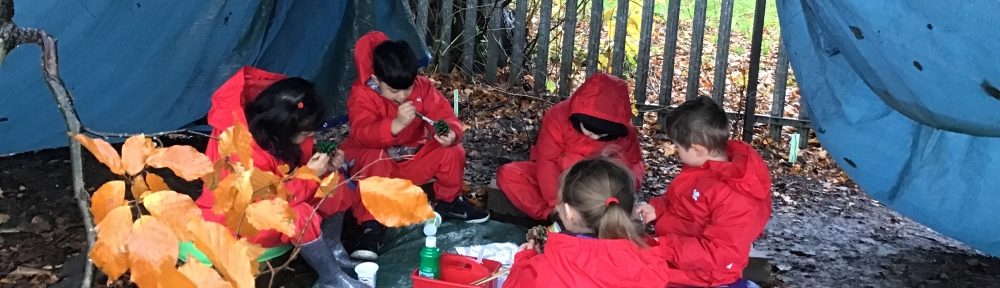
This week we made a tasty treat for the birds by turning a pine cone into a high energy treat. We carefully spread lard into the scales of the pine cone and rolled it in seeds.
They are hanging from tree branches around school so hoping the birds have found them!
This week we went on a journey around school looking for birds. First we looked at pictures of birds that we might see and where we might see them.

Then we learned how to use our binoculars. Off we went!
We saw a robin, crows, pigeons, red kites, sparrows, pied wagtails, but we didn’t expect to see a heron on a roof of a house! We think we saw a sparrow hawk too.

This week we thought about the meaning of Remembrance Day and why we wear poppies at this time. In the quiet of our woodland, and with a candle lit, we made poppies using wool and sticks. Afterwards we said a prayer to say thank you for the people that gave their lives for us and talked about our hope for a peaceful world.
Children from Mrs Barnes’ class helped to plant daffodils in terracotta pots. First we looked carefully at a daffodil bulb and many thought it looked just like an onion! But of course an onion is a bulb that we can eat. We checked carefully that we were placing the daffodil bulb the right way up, point at the top, flat plate at the bottom, and then covered it carefully with soil. We look forward to seeing the beautiful yellow flowers in spring!
In forest schools we celebrated harvest by going on a pumpkin hunt around school. We followed clues to lead us to the next pumpkin.

Each pumpkin was a different size and different colours and patterns!